
No products in the cart.
Free Shipping
Orders $99+ (excludes pool tables)
Authorized RETAILER
Full Warranty & Support
Secure Payment
Credit Card, PayPal, Affirm
From: $11,799.00
-
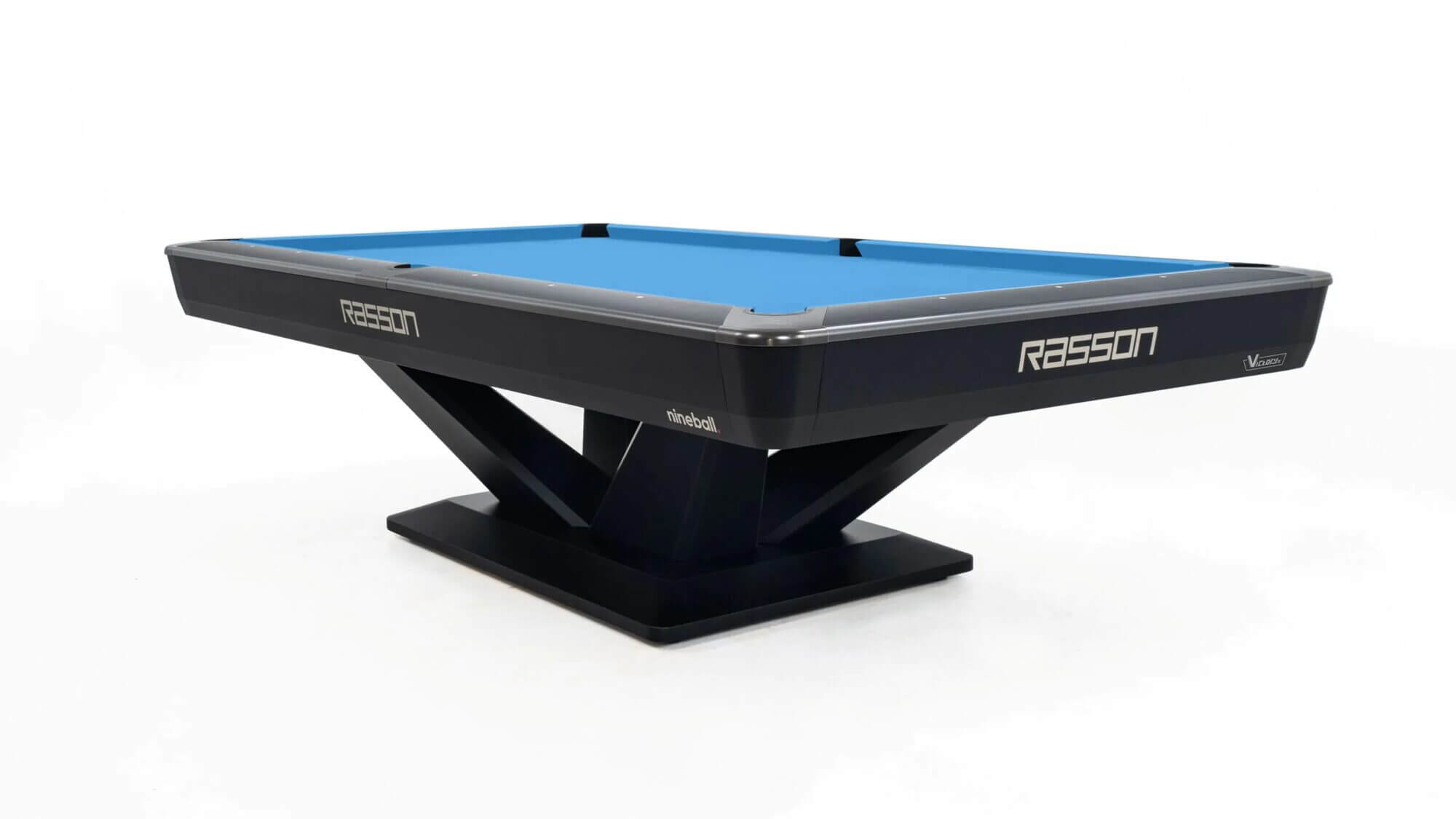
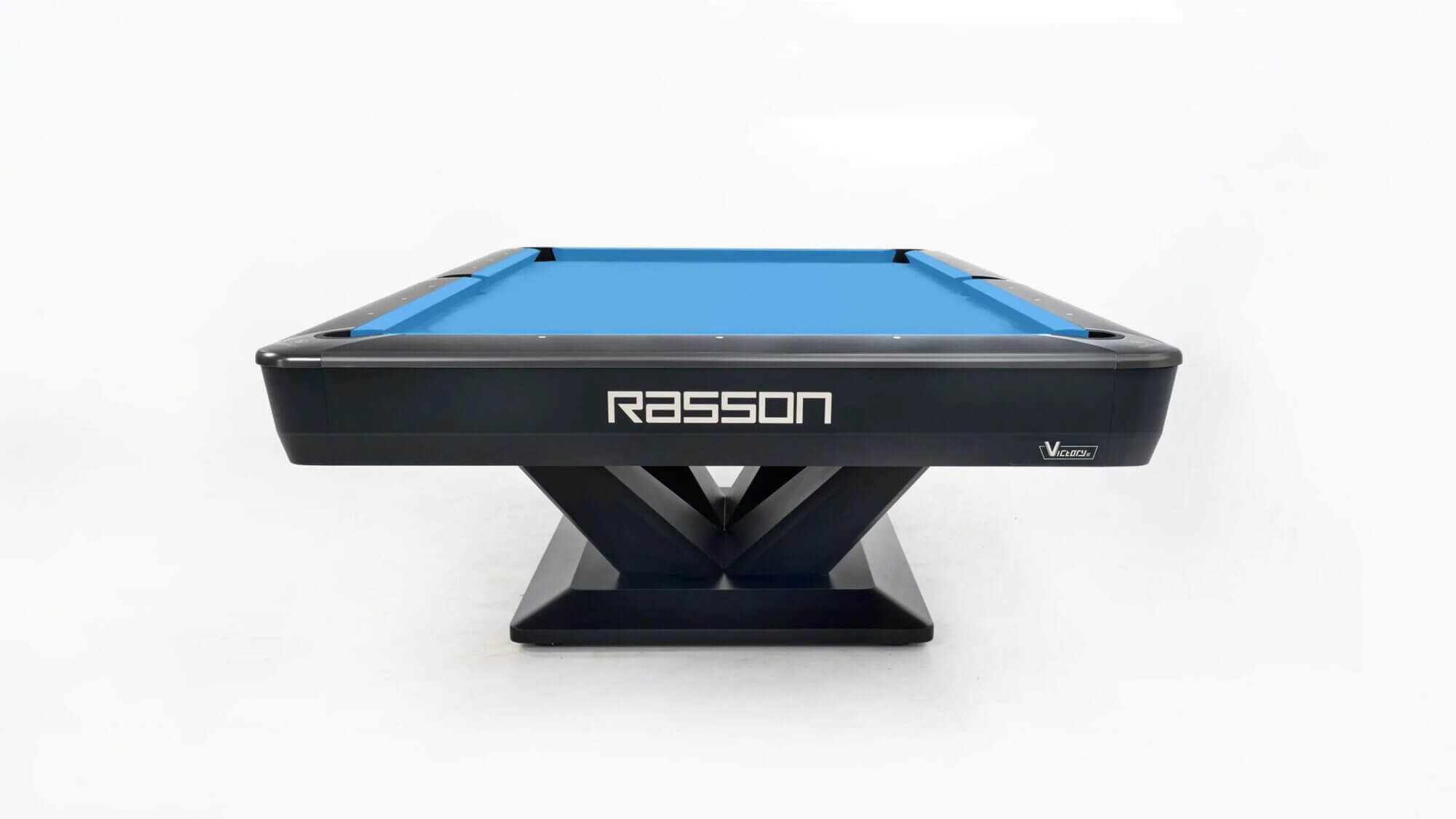
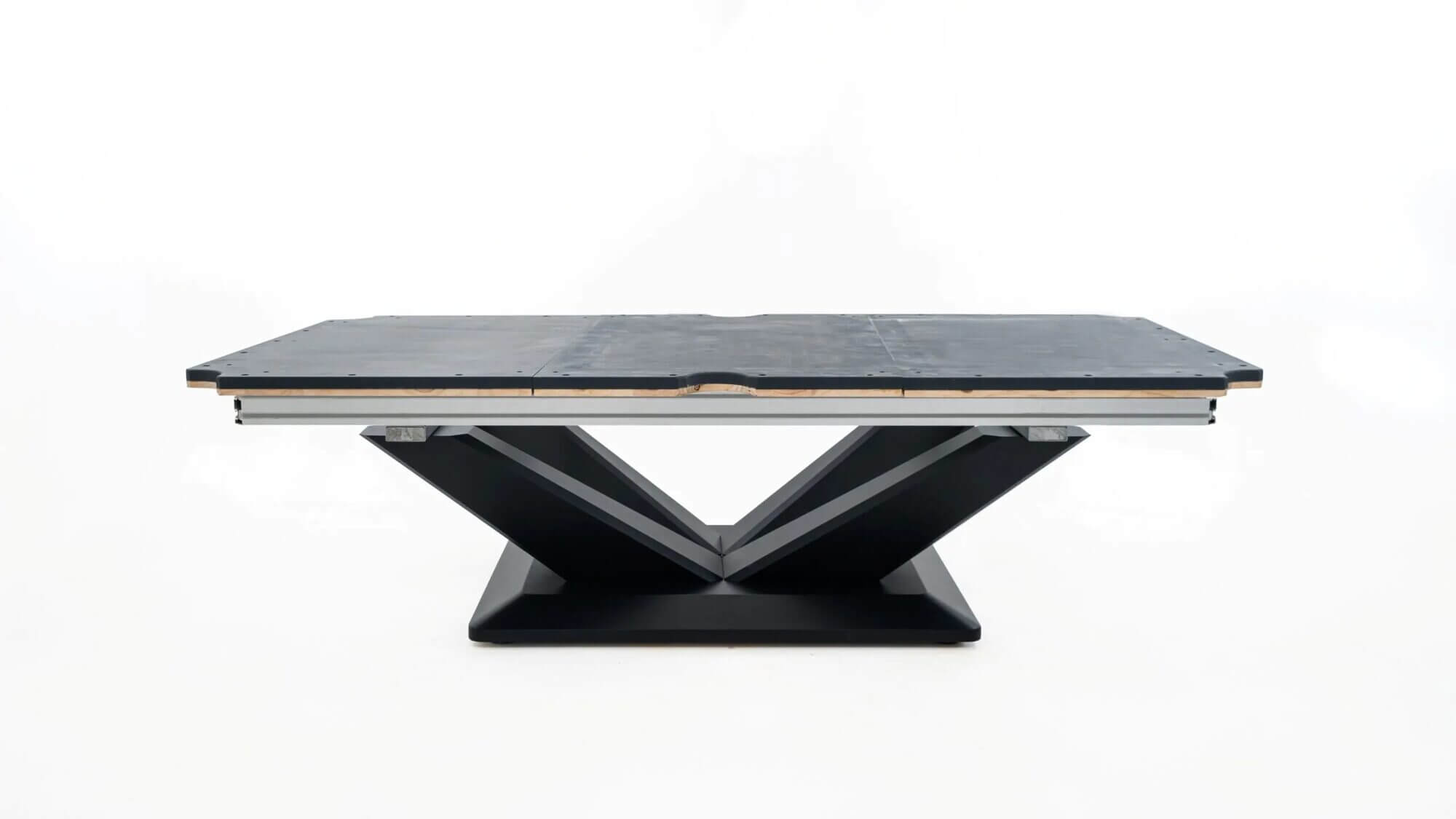
The Rasson Victory III pool table is the table Rasson builds for tournament floors, sold here for your room. Thirty-millimeter three-piece Rasson slate sits on an aluminum alloy beam, MAX K55 cushions run the rails, and the patented LevelBox II slate system plus metal leg levelers hold the playfield true long after install day. The pedestal base reads as a “V” from every angle. Available 8ft or 9ft, black or silver fluorocarbon, drop pocket or ball return.
Delivery and installation is $799 anywhere in San Diego County. Need an existing table moved first? See our pool table moving service.
Rasson makes a lot of good tables. The Victory line is the one that ends up under the lights at the Mosconi Cup and the World Pool Championship, and the Victory III is the current generation of it. When you set one up in a basement or a great room, you are not buying something inspired by a tournament table. You are buying the tournament table, in your choice of two finishes.
That distinction matters because the price gap between a “professional-grade” table and an actual professional table is smaller than most buyers expect, and the difference in how the thing plays five years in is not small at all.
Every table listing says “premium slate.” Here is what the number means in practice.
The Victory III uses 30mm Rasson slate in three pieces. Thicker slate resists the slow sag that shows up in thinner beds under their own weight, and three-piece construction is what makes a table of this size installable and re-levelable at all — a one-piece slate this size cannot get down a staircase and cannot be shimmed at the seams.
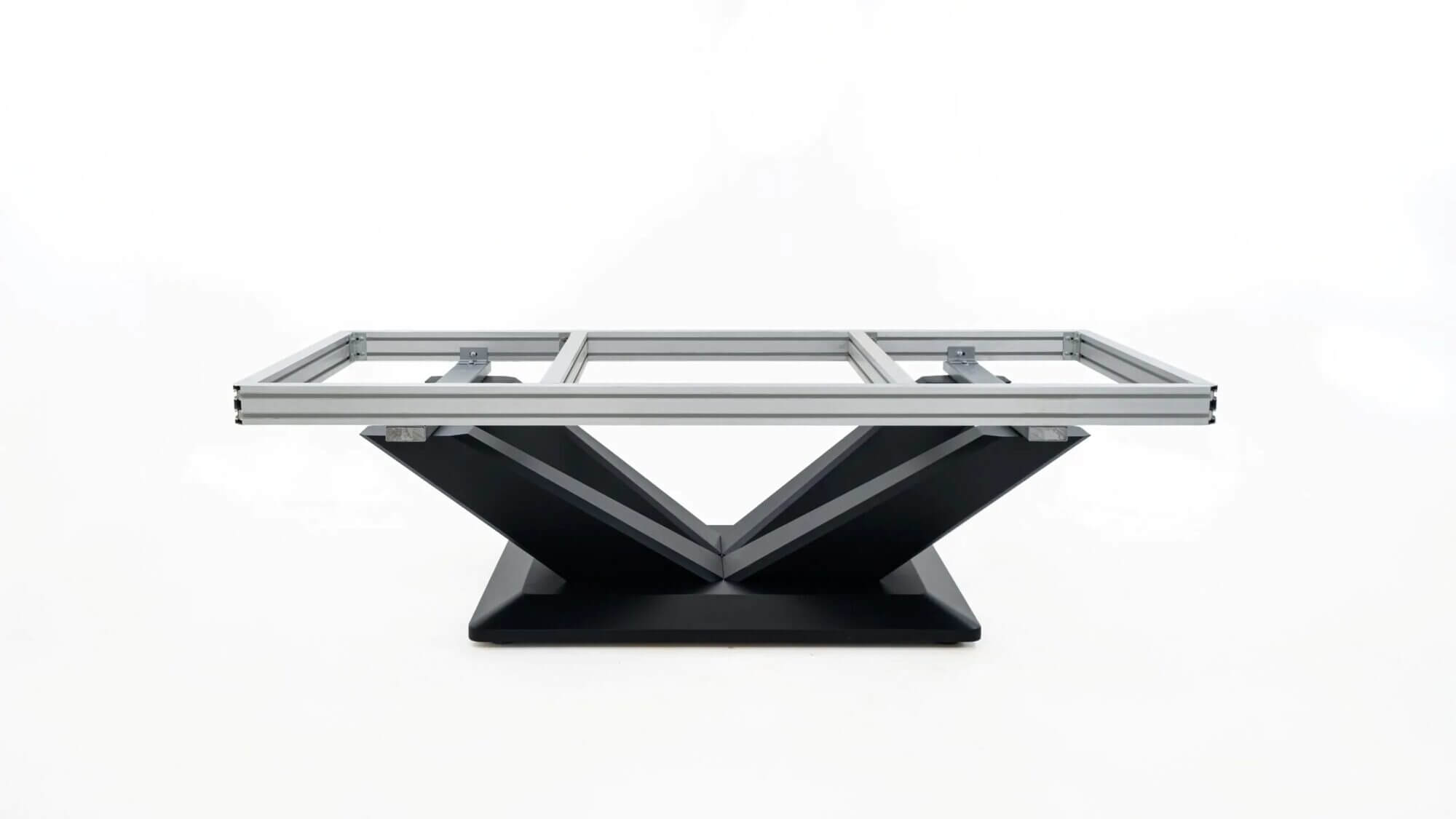
The part that separates the Victory III from its predecessor is underneath. The LevelBox II aluminum slate leveling system is Rasson’s patented mechanism for dialing the bed flat at the seams without stacking cardboard shims, and the leg levelers are Rasson’s own patented metal design rather than the plastic feet used on lower tiers. Together, they are the reason your installer can bring the table back to dead level in an afternoon three years from now, when the house has settled and the slab has moved a sixteenth of an inch. That is the real service life question on a table like this, and it is the one nobody writes about.
Under the slate, a reinforced aluminum alloy support beam replaces the wood beam found in most cabinets. Aluminum does not take on moisture, does not twist with a season change, and does not creep under a thousand pounds of static load the way a wood beam eventually can.
The rails carry Rasson MAX (K55) rubber. K55 is the profile spec used across serious competition tables, and the MAX compound is Rasson’s own. What you feel is a cushion that returns the ball predictably off the rail at speed and, more importantly, still does it in year four. Dead rails are the most common complaint on cheap tables and the most expensive thing to fix.
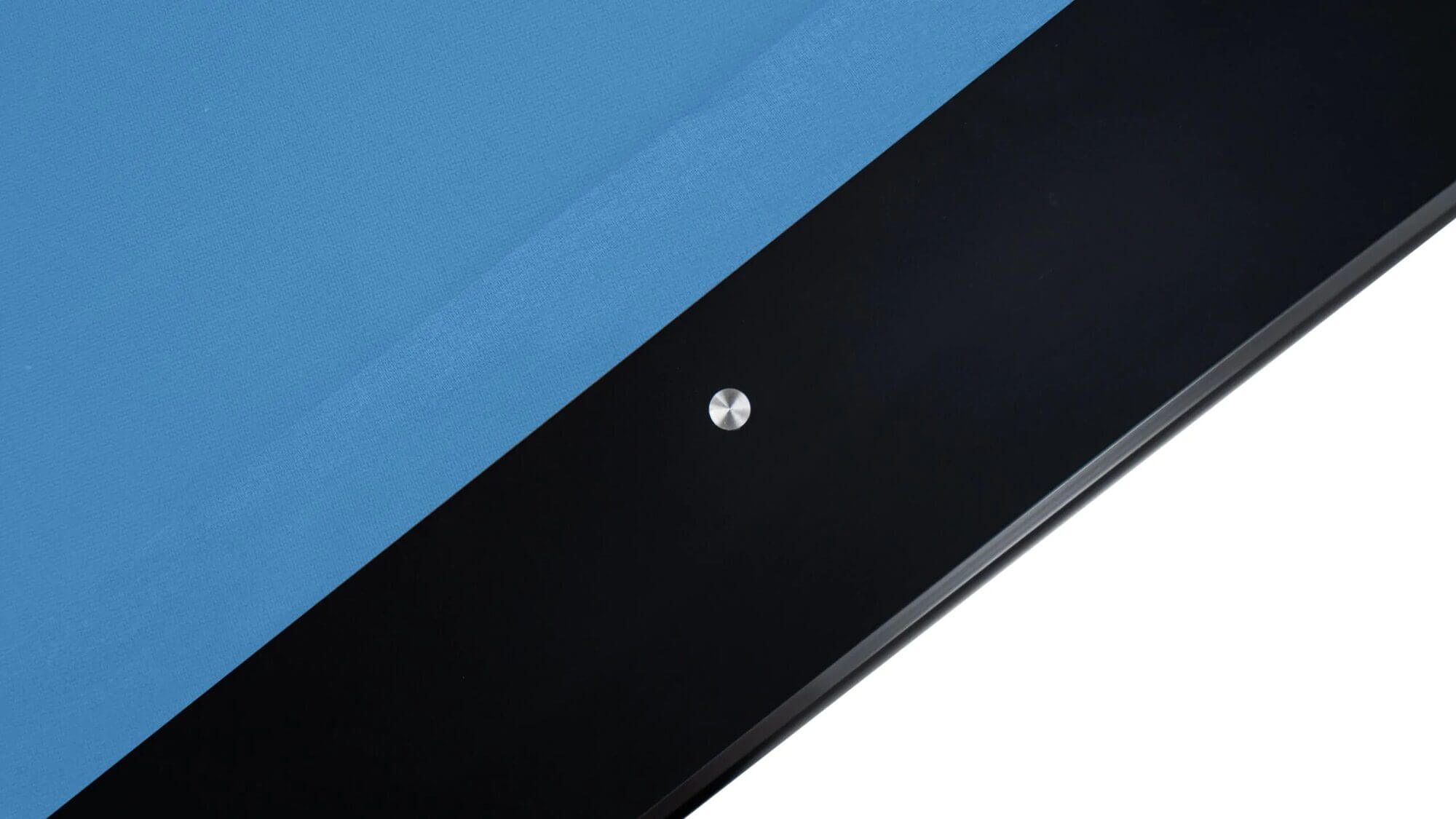
The rail tops are African solid wood capped in anti-fingerprint HPL — high-pressure laminate, the same category of surface used on commercial countertops. If you have ever wiped smudges off a gloss-black rail after a party, you will understand why this is on the spec sheet. Sights are stainless steel in black.
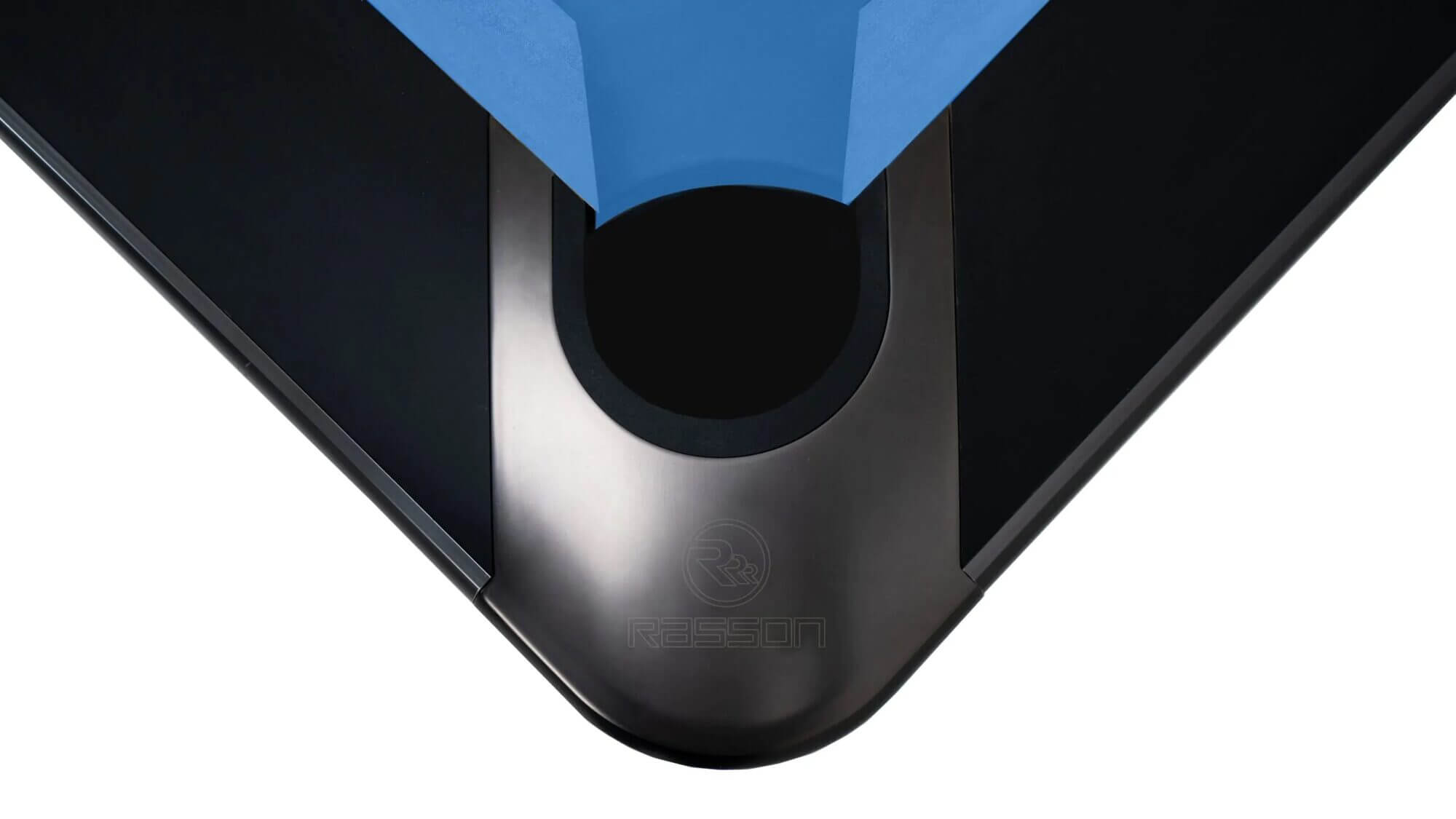
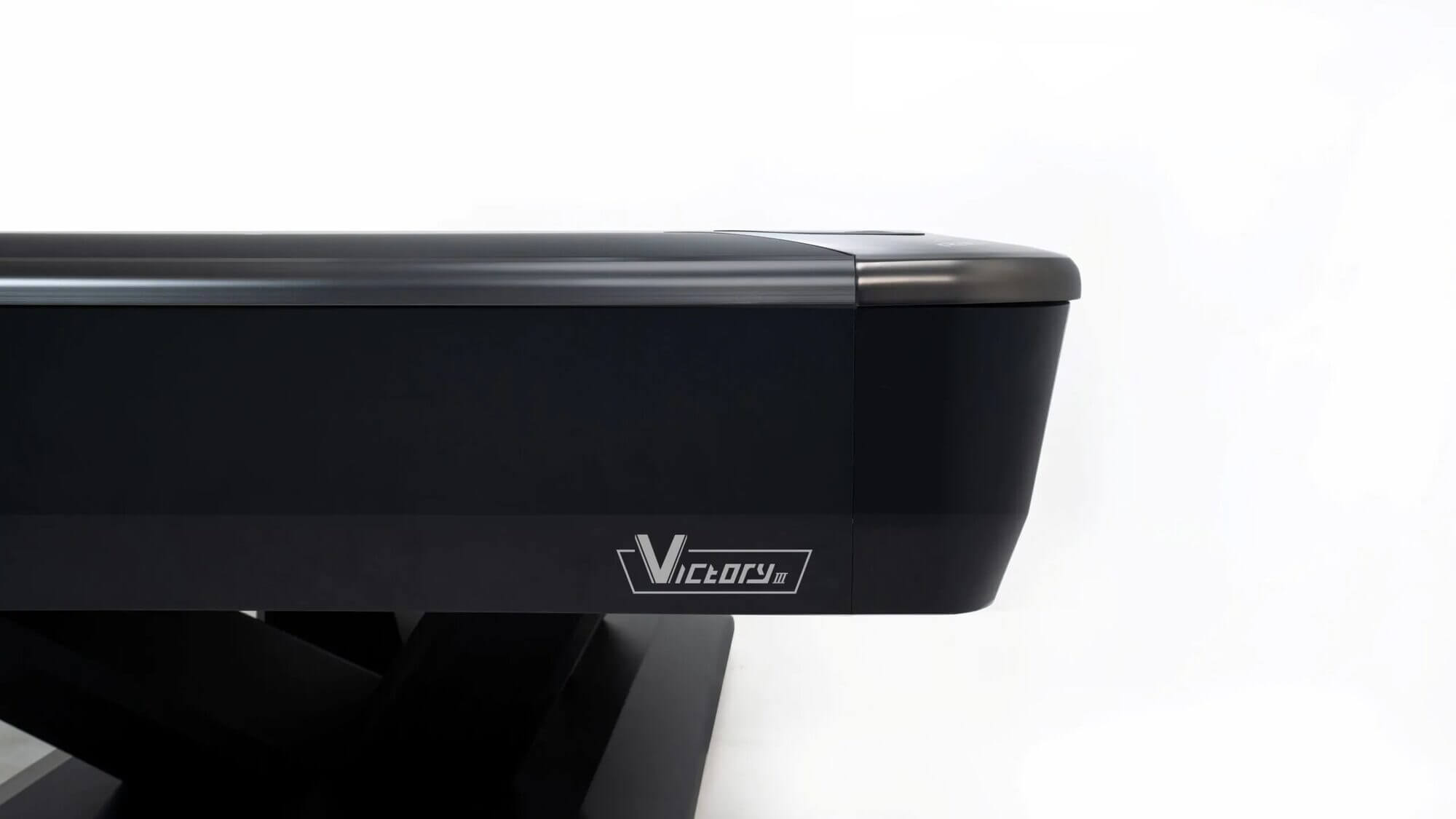
The full apron is aluminum alloy, not veneered MDF. The corners are electroplated zinc alloy, machined so the apron, rail, and leg meet without the filled-and-sanded seams you find on wood cabinets. The finish is a fluorocarbon paint process comparable to automotive standards, which is the reason a black Victory III still looks like a black Victory III after a decade of cue butts and belt buckles.
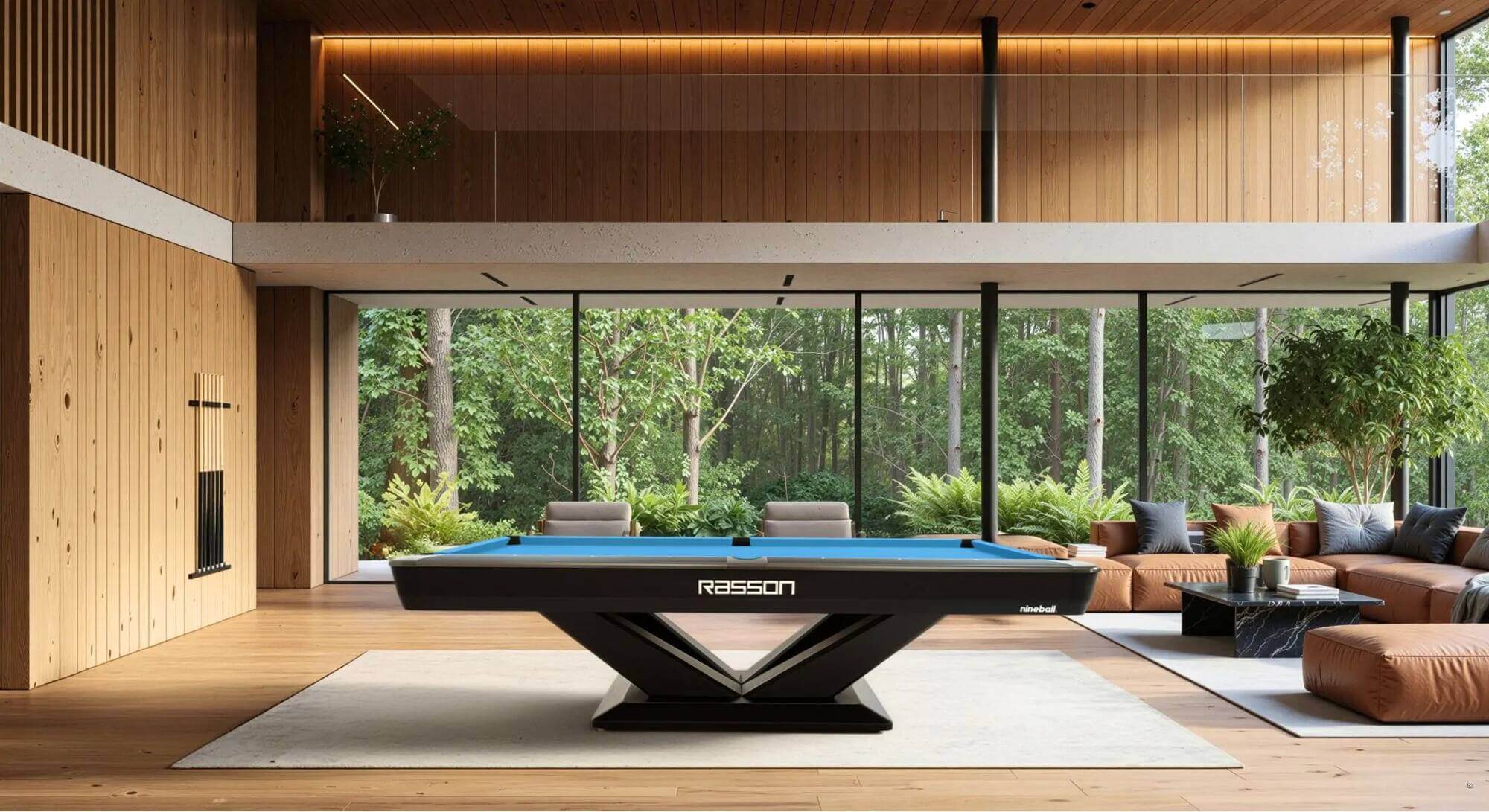
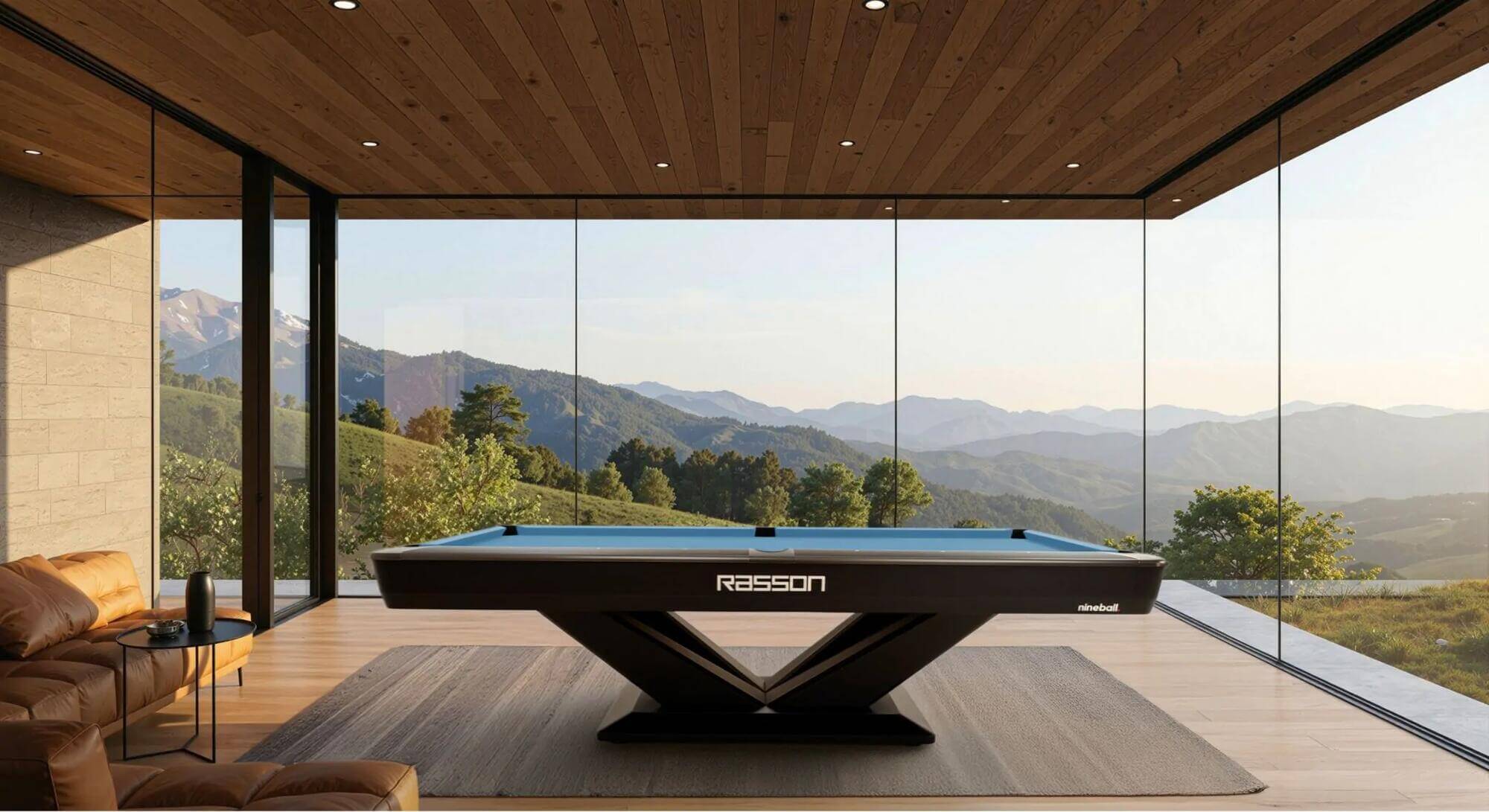
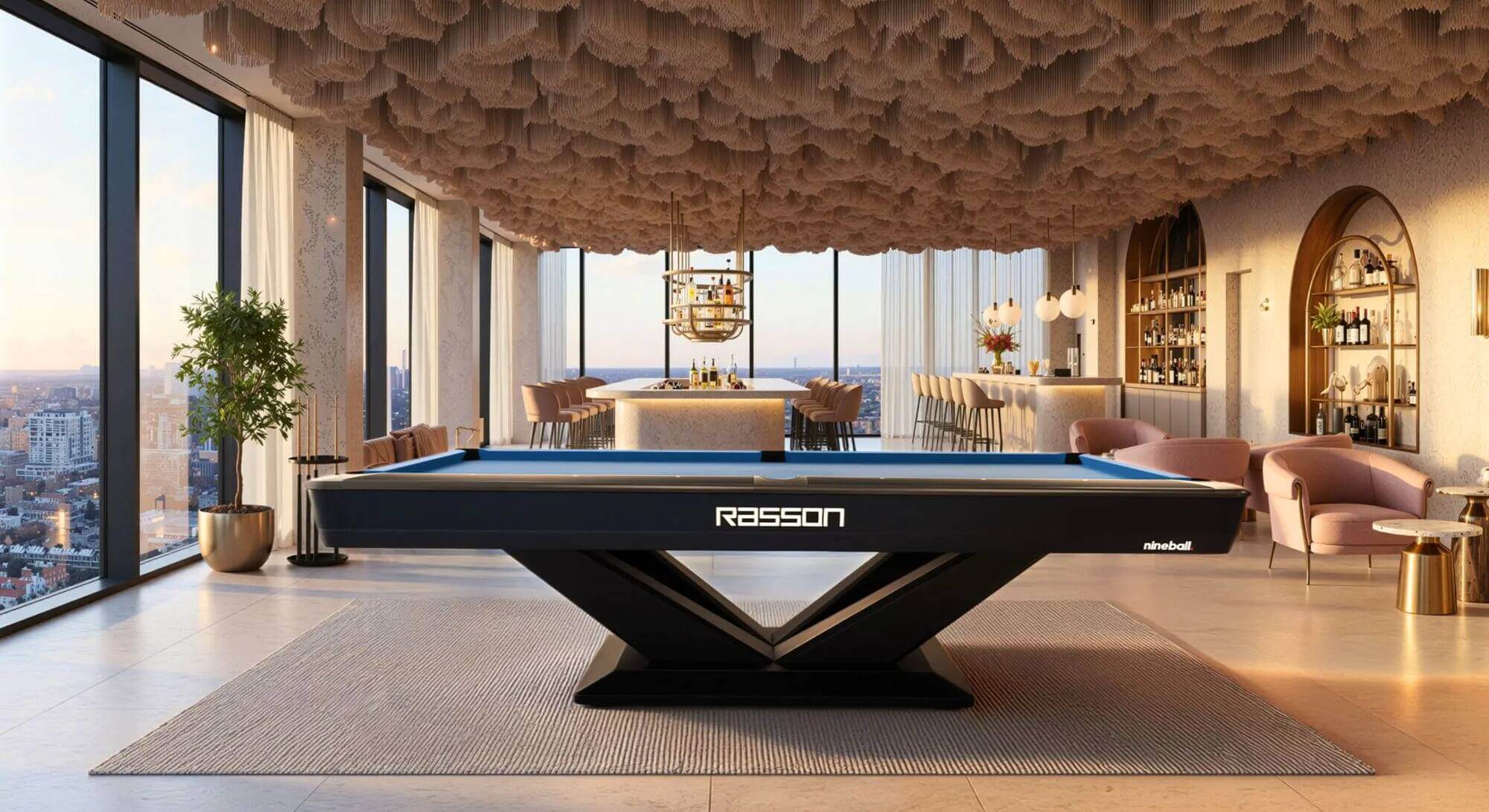
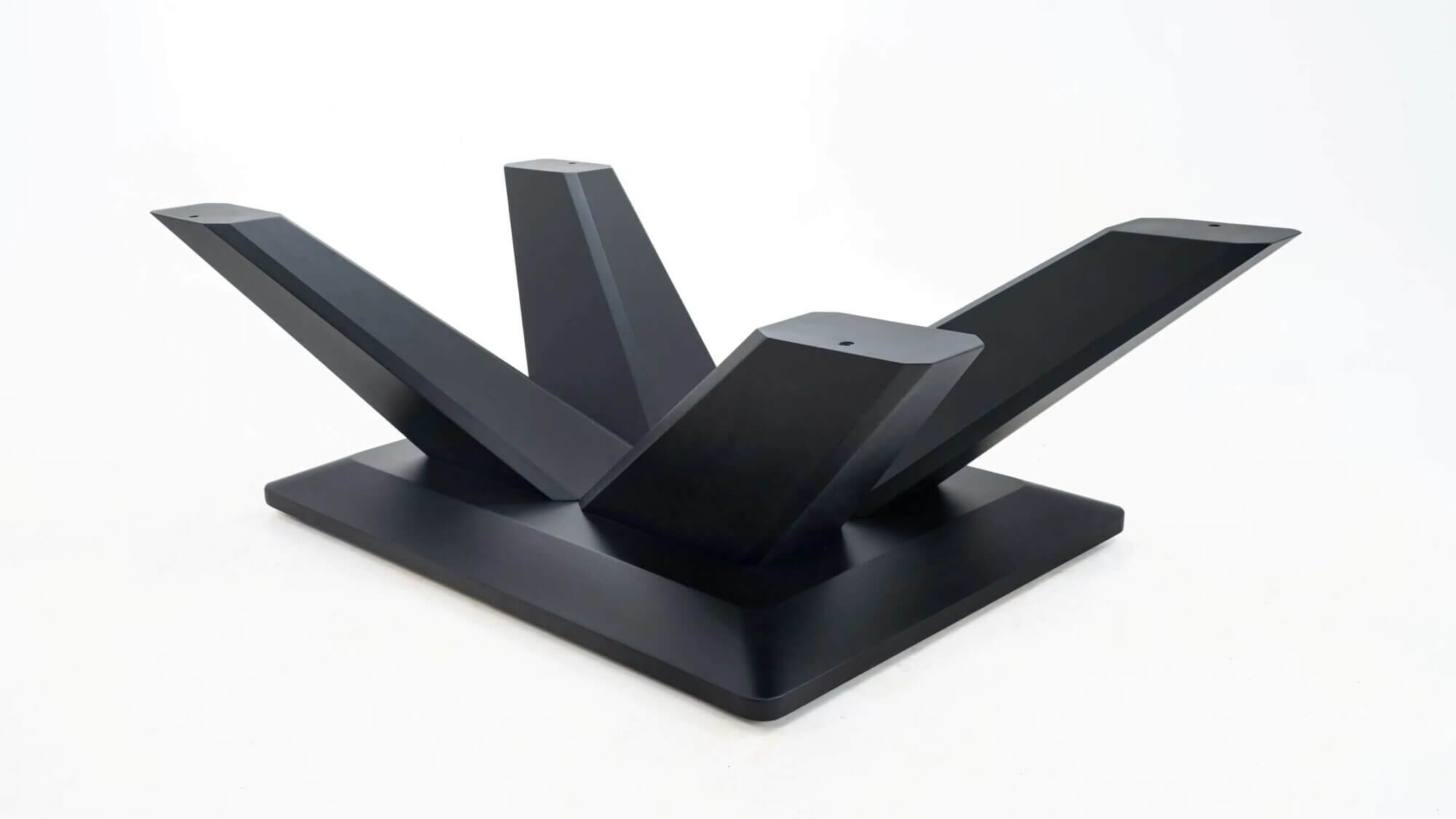
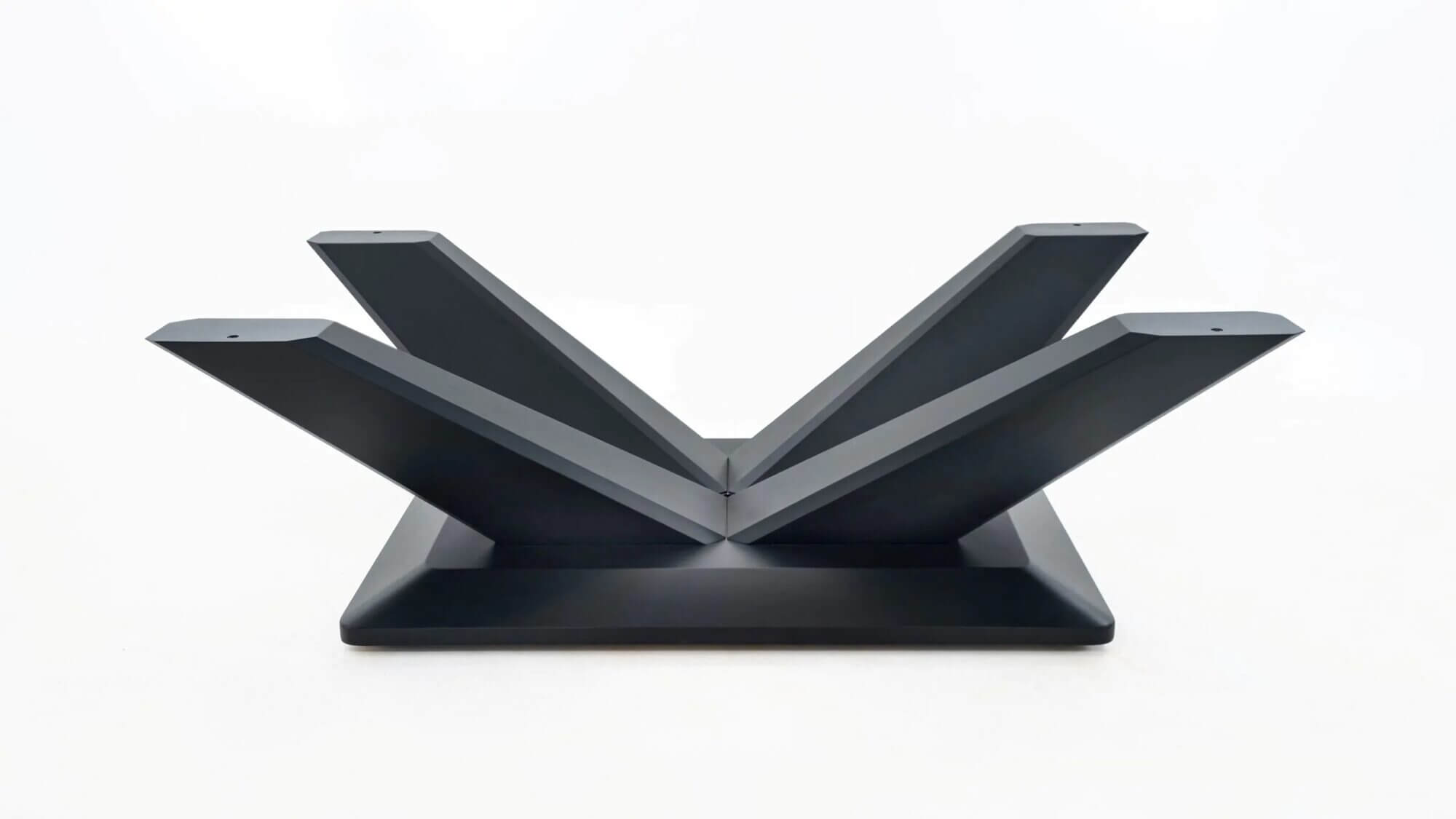
The pedestal legs are the signature. Solid wood and plywood core, wrapped in the same finish, angled so the base reads as a “V” from any side of the room. It is the rare tournament table that also works as furniture.
The Victory III comes as an 8-foot or a 9-foot. The 9-foot is the WPA competition size (50″ x 100″ playfield) and it is what you want if you are training for league or tournament play. The 8-foot (44″ x 88″) is the standard home game-room size and the one that fits most American basements.
Room clearance is the deciding factor, not floor space. Using Brunswick’s published minimums with a standard 58-inch cue, an 8-foot table wants roughly 13′ x 17′ and a 9-foot wants roughly 14′ x 18′. If you are short on one dimension, 52-inch cues pull the 9-foot requirement down to about 12’6″ x 16’6″ — a legitimate solution that serious players use, not a compromise you should feel bad about.
Measure your room before you order. If the numbers are close, call us and we will walk the layout with you, including where doors swing and where the light hangs.
Upstairs and raised-foundation installs. A Victory III assembled runs right around 1,000 pounds, and the pedestal base concentrates that load onto two footprints rather than spreading it across four or six legs. On a slab, this is a non-issue. On a second floor, over a crawlspace, or on an older raised foundation, the concentrated point load is worth a conversation before the truck is scheduled — sometimes with a structural engineer, usually just with your installer, who can orient the base perpendicular to the joists. This is not a reason to avoid the table. It is a reason to ask the question first instead of after the slate is upstairs.
Cue clearance at the pedestal. The V-shaped base is set inboard of the rails, so it does not interfere with a normal stance. But on a shot played from directly over the long rail near the middle of the table, your back foot lands closer to the pedestal than it would on a six-leg cabinet. In a room at the low end of the clearance chart, that is one more inch you want to have accounted for. Players in generously sized rooms will never notice it.
Choose drop pockets if the table lives in a home room and you want the cleanest look at the corners. Choose the ball return if the table gets heavy traffic, if you are running a bar or club, or if you would rather not walk six pockets after every rack. Neither affects how the table plays.
Finish is black fluorocarbon or silver fluorocarbon. Cloth is your call from the full color chart, with worsted wool upgrades available — on a table at this level, worsted cloth is the upgrade we recommend most often, because a napped cloth is the one component that will hold back everything else on the spec sheet.
We have been selling and installing tables in San Diego since 2003, and we ship the Victory III to all 48 contiguous states. Local install and setup covers San Diego County, Orange County, and Los Angeles. Every table we install gets leveled with a machinist’s level, not a bubble level from the hardware store, and we come back if it moves.
| Spec | Detail |
|---|---|
| Sizes | 8 ft, 9 ft |
| Playfield | 44″ x 88″ (8 ft), 50″ x 100″ (9 ft) |
| Cabinet dimensions (9 ft) | 115″ L x 65″ W x 33″ H |
| Assembled weight | Approx. 1,000 lb |
| Slate | Rasson, 30mm thick, 3-piece |
| Cushion rubber | Rasson MAX (K55) |
| Rail | African solid wood with anti-fingerprint HPL |
| Sights | Stainless steel (black) |
| Metal corners | Zinc alloy, electroplated |
| Apron | Aluminum alloy |
| Support beam | Aluminum alloy |
| Slate leveling | LevelBox II (aluminum), Rasson patented |
| Leg levelers | Rasson patented design, metal |
| Legs | Solid wood and plywood, pedestal |
| Finish | Black fluorocarbon or silver fluorocarbon |
| Pockets | Drop pocket or ball return |
| Standards | Exceeds EPBF and WPA specifications |
| Weight | 1000 lbs |
|---|---|
| Dimensions | 100 × 57 × 32 in |
| Pool Table Size | 8' Foot, 9' Foot |
| Pool Table Color | Black |
| Pool Table Style | Commercial, Modern |
| Brand | Rasson |
| Pool Table Pocket Type | Drop Pocket, Automatic Ball Return |
| Rasson Product Line | Victory III |

-
Add to cart-
Add to cart-
Add to cartFree Delivery
Orders over $99
19 years of experience
ESTABLISHED 2003 - San Diego, ca
SSL secure checkout
Pay with confidence
authorized Reseller
100's of quality brands


Reviews
There are no reviews yet